Last updated November 23, 2026
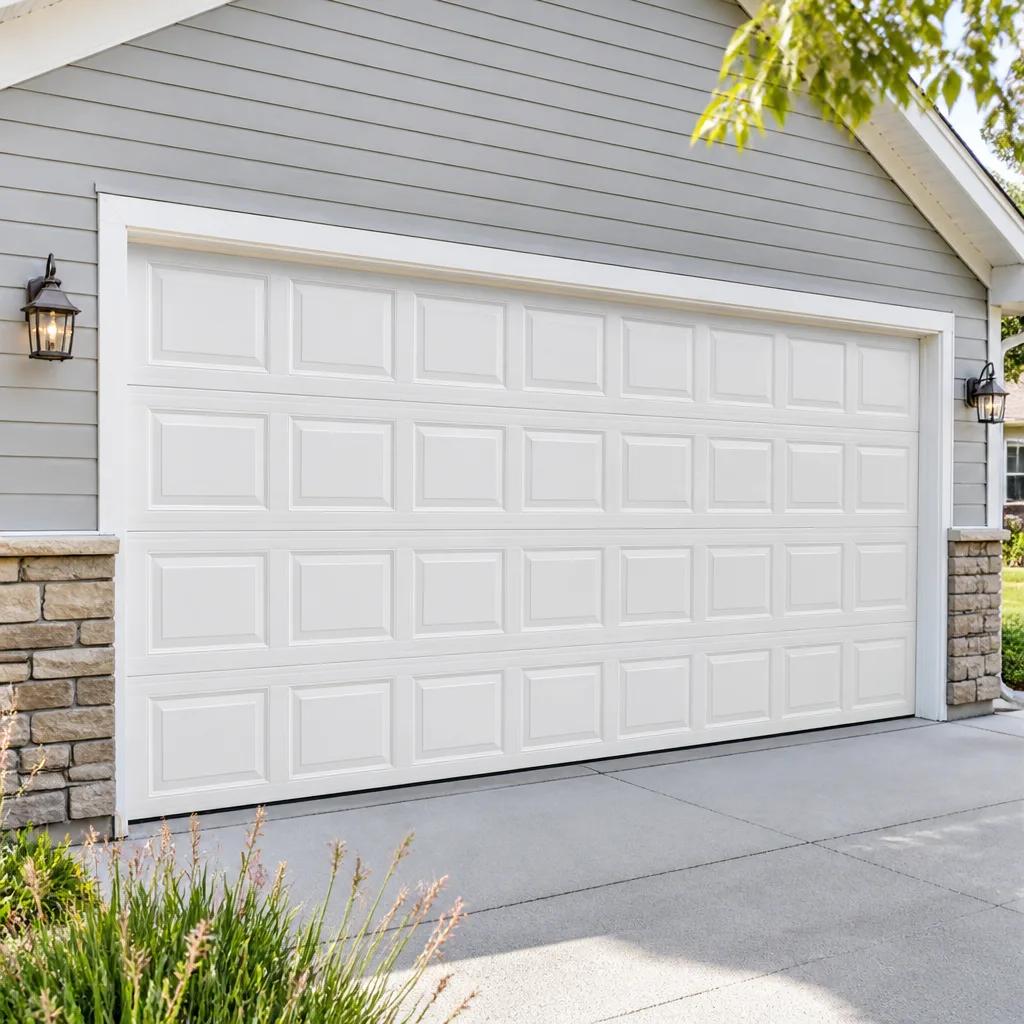 Raised-panel steel
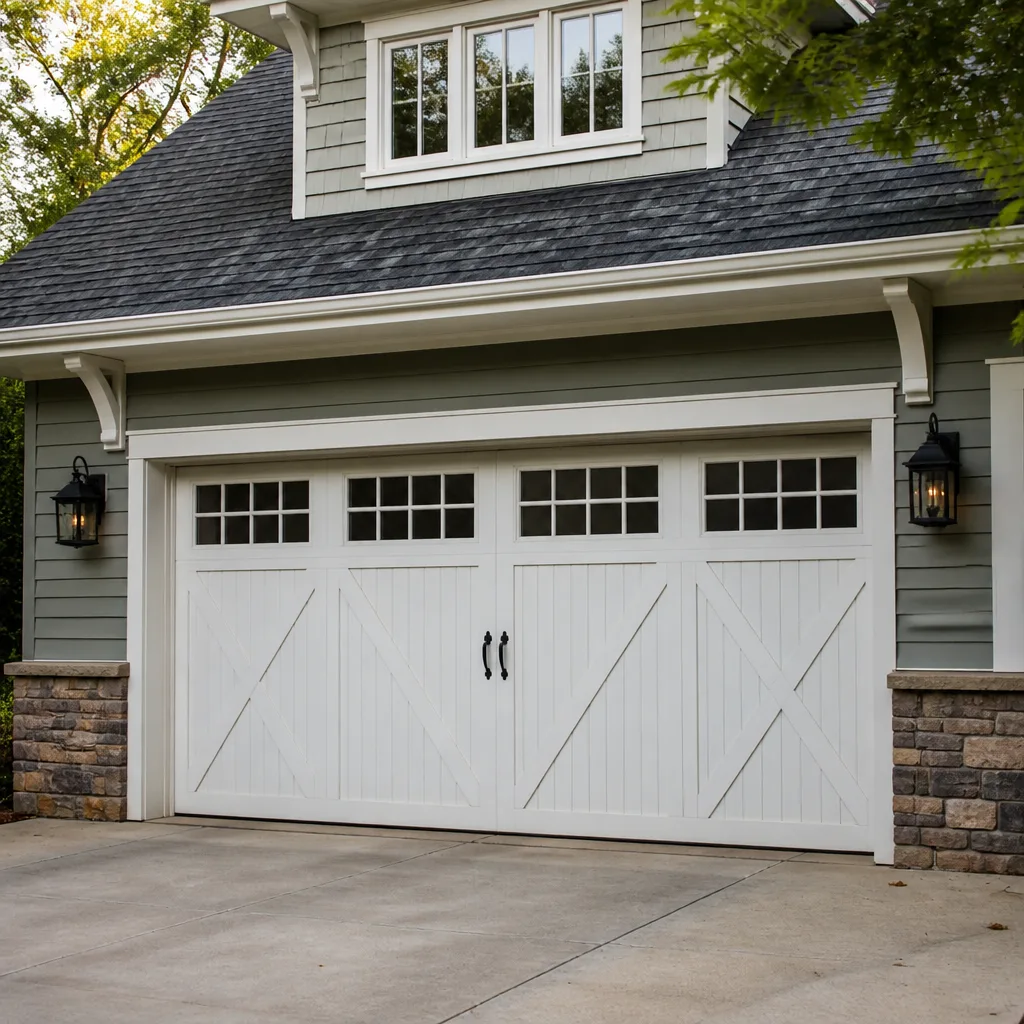 Carriage house
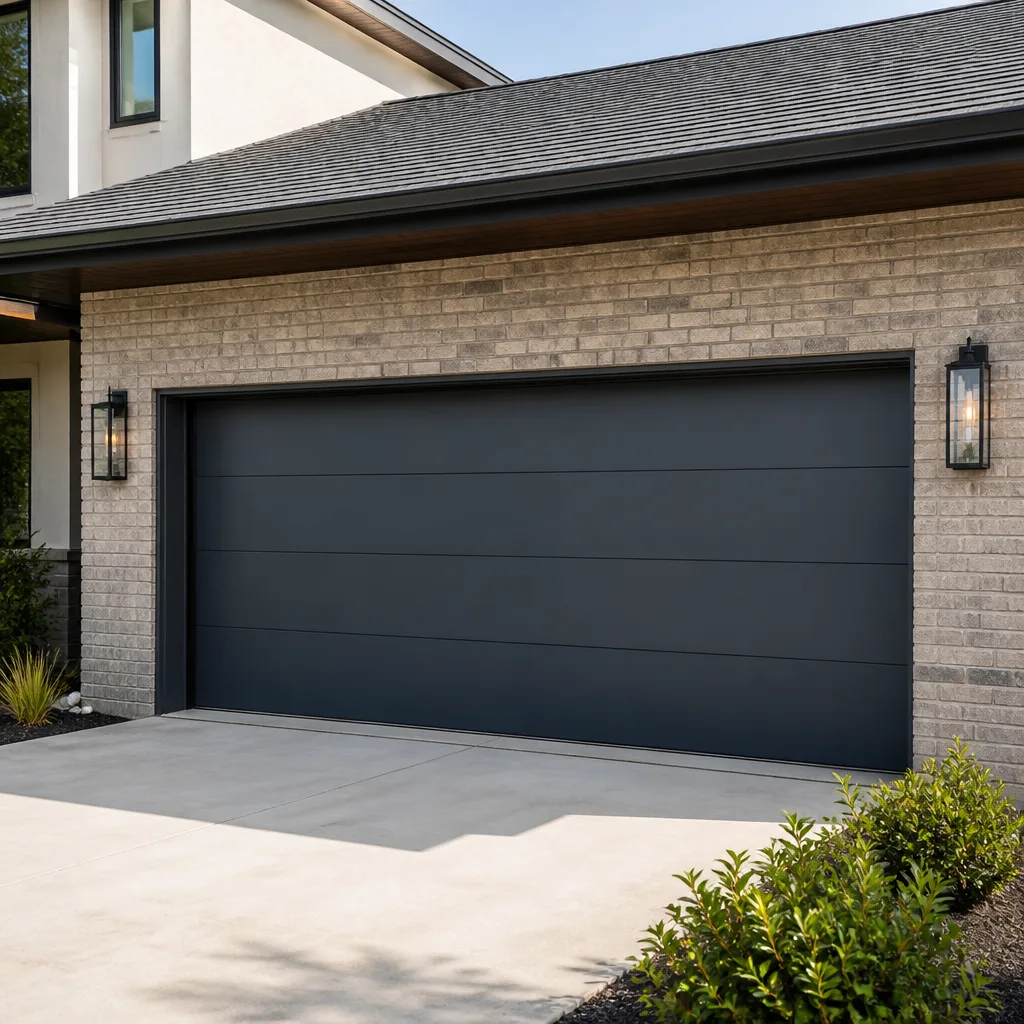 Modern flush
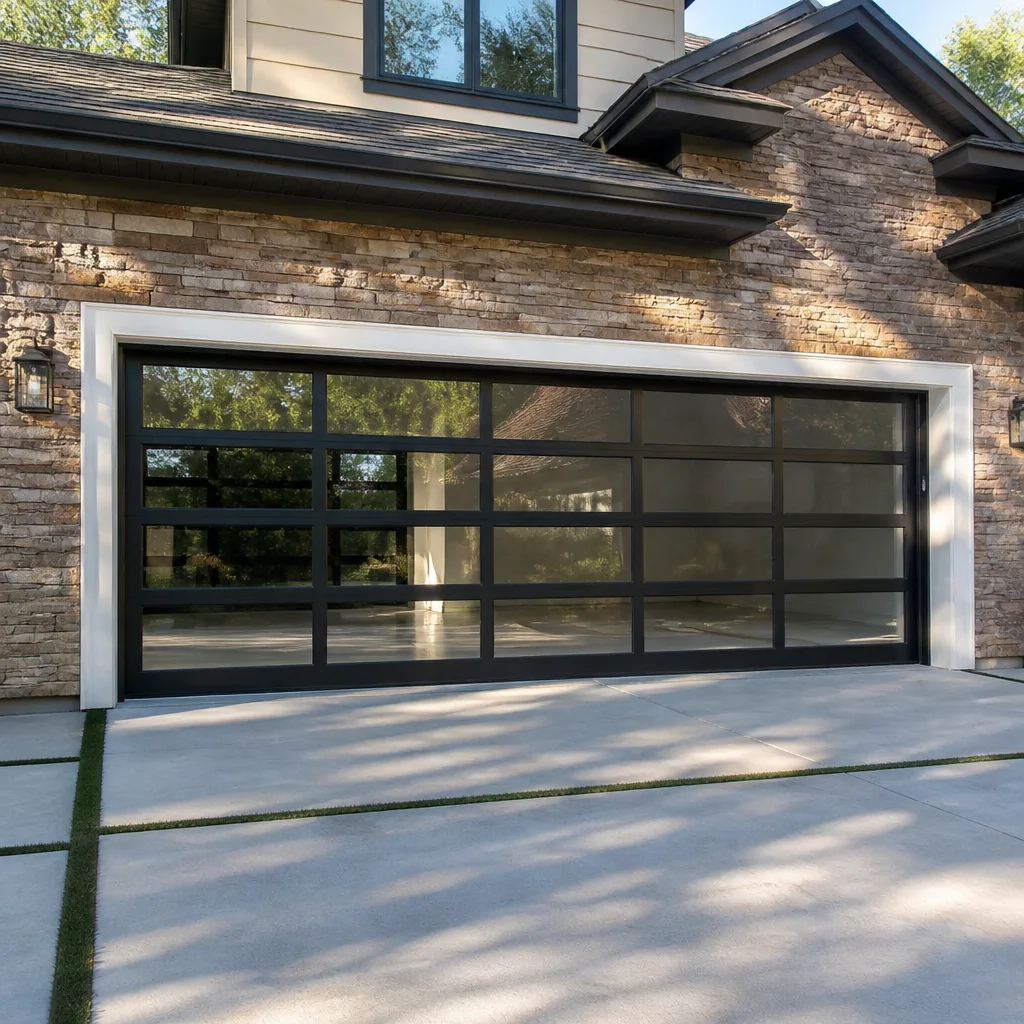 Full-view glass
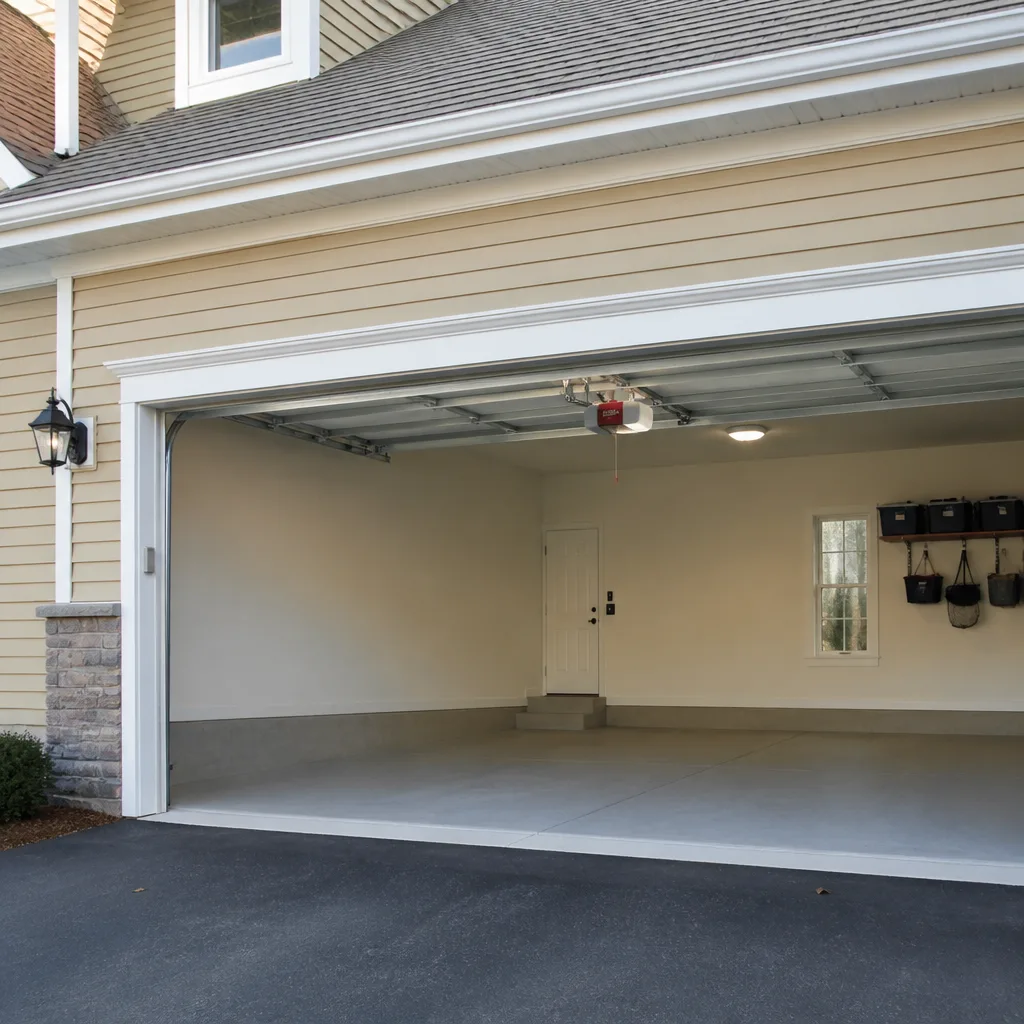 LiftMaster openers
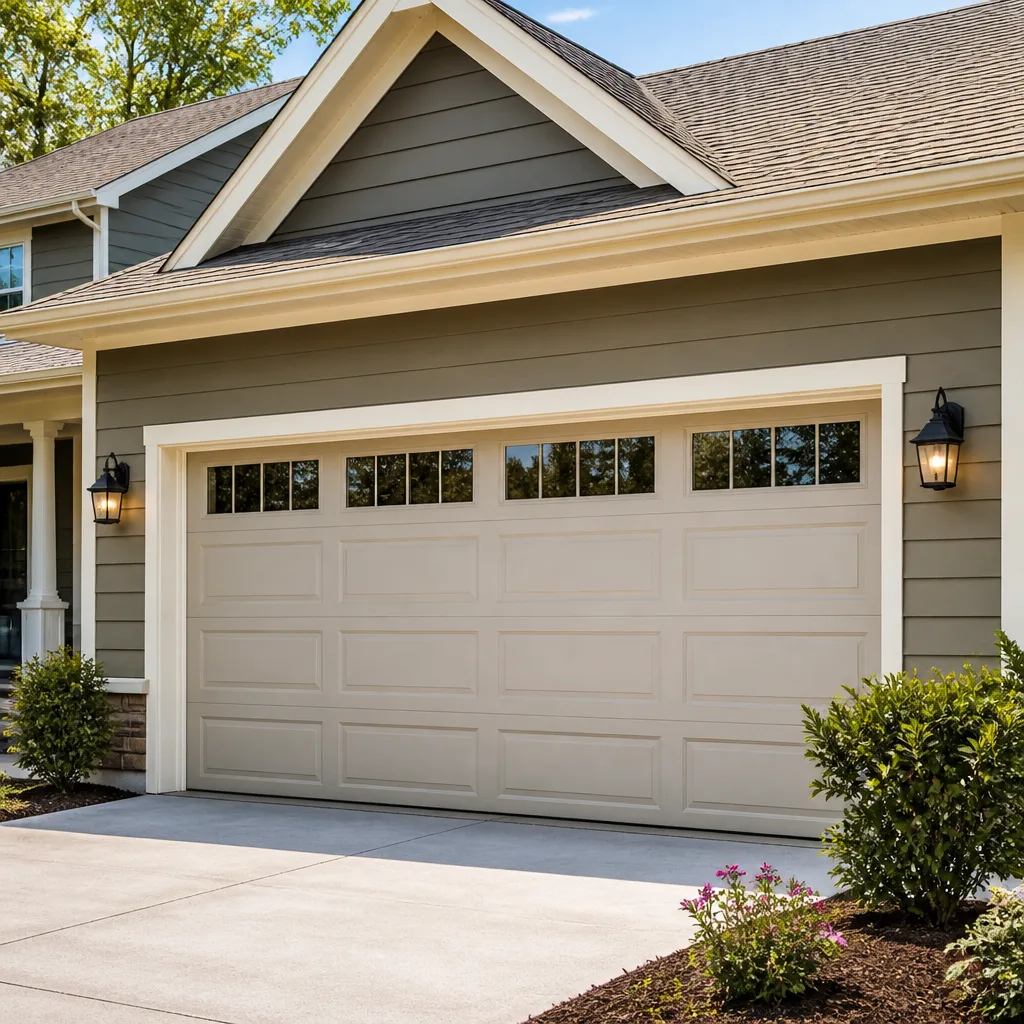 Chamberlain openers
Full 25-point door and opener safety check with every visit - springs, cables, rollers, tracks, and your LiftMaster or Chamberlain opener included
You get a price before we start. It does not change when the pro arrives.
Get your free estimateGarage Door Warning Signs: A Cherry Hill Homeowner’s Reference Guide
Most garage doors don’t fail without warning. They fail after weeks or months of telling you something was wrong, in a language most homeowners haven’t learned to read. A grinding noise and a scraping noise sound similar from the kitchen, but they point to completely different problems – one is a lubrication issue you can address, the other is a track alignment fault that can pop a cable and drop a door. If you can’t tell them apart, you can’t know whether to keep using the door tonight. This guide decodes the sounds, movements, and visual clues a failing door gives you, and sorts them into what means stop, what means schedule, and what means keep an eye on it. We’ll also walk you through a 90-second inspection you can run in Cherry Hill without touching a single high-tension part.
Quick Answer
The warning signs that matter most on a garage door are a door that reverses before it reaches the floor, uneven or jerky travel, a snapping or popping sound from above, visible gaps or bends in the springs, and frayed cables. Any of those five means stop using the door and get it looked at. Grinding, squealing, and light rattling are usually lubrication or hardware wear and can be scheduled. A door that’s merely slow but moves evenly is often an opener or adjustment issue rather than a mechanical failure.
Styles & brands we work with
- Raised-panel steel
- Carriage house
- Modern flush
- Full-view glass
- LiftMaster openers
- Chamberlain openers
Table of Contents
- What Each Sound Tells You: Grinding, Scraping, Popping, Rattling, and Squealing
- Visual Warning Signs Most Homeowners Walk Right Past
- Behavioral Signs: What Slow, Uneven, or Reversing Movement Actually Means
- Stop Now, Schedule This Week, or Monitor: Sorting the Signs
- The 90-Second Self-Inspection That Covers the Top Five Failure Precursors
- How Cherry Hill Weather and Housing Shape What Fails First
- Brand Matters Less Than You Think – But It Still Matters
- Repair or Replace? Reading the Warning Signs Together
What Each Sound Tells You: Grinding, Scraping, Popping, Rattling, and Squealing
Sound is the earliest signal a garage door gives, and it’s the one most people dismiss because a garage is a noisy place by nature. The trick is separating the sounds a healthy door makes from the ones it shouldn’t. Here’s the mechanical translation.
- Grinding – usually dry or worn rollers, a dry torsion tube, or a failing bearing plate. It’s a friction sound, not an impact sound, and it tends to build gradually. Grinding is rarely urgent on its own, but it accelerates wear on everything it touches, so it’s worth scheduling rather than ignoring for months. A door that grinds for a long time starts eating its own rollers.
- Scraping – metal dragging on metal, most often a misaligned track or a bent section rubbing the jamb. This one deserves attention quickly. A track that’s out of alignment puts lateral stress on the cables, and a cable under stress is the part that fails suddenly. If the scraping is loud enough to hear from inside the house, stop using the door and have it looked at.
- Popping or a single loud snap from above the door – this is the torsion spring. A popping sound can mean a spring is binding, or it can be the sound of a spring that has just broken. If you hear it and the door suddenly becomes very heavy or won’t lift, the spring has failed. Stop there. Don’t try to force it.
- Rattling – loose hinges, loose bolts on the track brackets, or a worn roller stem. Usually the least serious of the group, and often fixed with a wrench and a few minutes. If the rattle appeared suddenly rather than gradually, though, check whether a bracket has worked loose from the wall – that’s a different problem.
- Squealing – a dry roller or a dry hinge. Classic lubrication issue. It’s the sound most people notice first and the easiest to resolve.
If you can’t identify the sound with confidence, the safe move is to stop cycling the door and get it diagnosed. In our experience across Cherry Hill, the doors that fail catastrophically are usually the ones where a grinding or scraping noise went unaddressed for a season. When a noise turns out to be a spring or cable problem, garage door spring repair is a dedicated job – it’s the most mechanically demanding repair on a door and deserves a specialist rather than a generalist.
Visual Warning Signs Most Homeowners Walk Right Past
Mechanical problems usually show up visually before they turn into a failure, but the clues are subtle and easy to miss on a quick walk past the door. These are the ones we look for whenever we’re on a Cherry Hill property.
- Cable fraying at an angle. A healthy lift cable is a clean, straight weave of wire. Frayed strands that splay out at an angle – especially near the drum at the top corners – mean the cable is under abnormal stress. A cable with even one broken strand should be treated as compromised. Don’t touch it; it’s under tension.
- A gap in the spring coils. Look at the torsion spring above the door (or the extension springs if the door has them). A spring should have an even coil spacing. A visible gap between coils, or a spring that looks stretched longer than it should be, means it’s under load it wasn’t designed for. A torsion spring that has actually broken will show a clean split, often with the two halves hanging loose. Either way, that’s a stop-the-door signal.
- Roller wear patterns. Worn rollers flatten or develop a wobble. Check the rollers by eye from the floor: if the wheel looks egg-shaped rather than round, or the stem is bent, it’s time to replace them. Worn rollers put uneven pressure on the track, which is where the scraping often starts.
- Track bends and gaps. A track should be straight and parallel to the door edge. A visible kink, a gap between the door and the track, or a track bracket pulling away from the wall all indicate impact damage or settling. A dented track is a derailment risk.
- Sagging panels and loose hinges. Panel seams that don’t line up, or a door that looks like it sags on one side, suggest a hinge or hinge-plate issue. Sagging isn’t cosmetic – it changes how the door sits in the frame and strains the opener.
- Weather seal gaps at the floor. A worn bottom seal lets water and cold air in and can let the door bottom out unevenly, which eventually stresses the panels and hinges. In a Cherry Hill winter, a bad bottom seal also lets meltwater freeze under the door, which changes the way the door seats.
If any of these look familiar, a professional assessment is worth the call. The good news is that many of these visual clues are caught early enough to schedule a repair rather than an emergency – garage door repair on a door that’s still cycling is far cheaper and less disruptive than repair after a failure.
Behavioral Signs: What Slow, Uneven, or Reversing Movement Actually Means
How a door moves tells you as much as how it sounds. Behavioral signs are often misread as “the opener is going” when the cause is mechanical, or the reverse. Here’s the translation.
- Slow or labored descent. If the door drops but feels sluggish, or the opener sounds like it’s working harder than it used to, the cause is usually friction somewhere in the system – worn rollers, a dry track, or a spring that’s lost some of its lift. It’s not the opener straining; it’s the door fighting back. This is a schedule-this-week sign, not a stop-now sign.
- Uneven movement side to side. A door that rises faster on the left than the right is telling you the lift is unbalanced. That usually points to a cable or drum issue, or to a torsion system that’s out of adjustment. Uneven travel is a stop-using-it sign. An unbalanced door can derail.
- Reversing mid-close for no reason. This is less often a mechanical fault than a safety-system issue. The opener’s safety sensors at the bottom of the door, or the force-setting built into the opener, are telling the door to back off. Sometimes it’s a dirty or misaligned sensor. Sometimes it’s the door binding somewhere the force sensor is catching. Either way, a door that won’t close reliably is a security problem, and on a Cherry Hill property where the garage is the everyday entry, that’s not something to leave overnight.
- A door that reverses the moment it touches the floor. This is usually the safety reverse system working as designed, catching a misadjusted bottom edge. It’s a calibration issue, not a failure.
- A door that stops partway and won’t continue. Usually the opener cutting out under load, which points back to the door being too heavy to lift – a spring problem. Stop using it and get it evaluated.
If the pattern is in the opener rather than the door – it hums and doesn’t move, the remote is flaky, the wall button doesn’t respond – that’s a separate specialty. garage door opener repair covers the full range of smart and traditional opener systems, and the diagnostics are different from those of a mechanical door failure.
Stop Now, Schedule This Week, or Monitor: Sorting the Signs
The most useful skill this guide can give you is a triage system. Not every warning sign is urgent, and treating every squeak as an emergency is as unhelpful as ignoring a broken spring. Here’s how we sort what we hear from Cherry Hill homeowners.
Stop using the door now
- A popping or snapping sound from above the door, followed by a door that won’t lift or feels very heavy
- A visible gap or split in a torsion spring, or extension springs hanging loose
- Frayed or broken cables, especially near the drum at the top corners
- Uneven side-to-side movement or a door that derails off the track
- A door that reverses before reaching the floor and won’t close at all (security issue)
- Visible track bends or a bracket pulling away from the wall after an impact
Schedule service this week
- Grinding or squealing that has been getting louder
- Scraping that you can hear but the door still cycles
- Slow or labored movement with an evenly rising door
- Worn rollers, wobbling wheels, or a wobbly door
- An opener that strains or a remote that’s become unreliable
- A door that repeatedly reverses at the floor
Monitor and lubricate
- Light rattling at the hinges or brackets (check they’re snug)
- A door that squeaks but moves evenly and closes properly
- Minor seal wear at the bottom (worth replacing before winter)
This triage is where most homeowners go wrong in both directions. A squealing door gets ignored for a year, and a single pop gets diagnosed as “probably nothing.” The middle category is where most of the actual repair volume lives, and it’s where a scheduled visit does the most good. If a string of these signs has stacked up, it’s worth having a professional look before something that was a schedule-this-week issue becomes a stop-now emergency. Cherry Hill Garage Door Repair Pros handles both, and a free estimate on a door that’s still working will almost always cost less than one that’s failed.
The 90-Second Self-Inspection That Covers the Top Five Failure Precursors
You don’t need to touch a high-tension component to catch the most common failure precursors. This inspection is designed to be done from the floor, without tools, and without putting your hands anywhere near the springs, cables, or drums. Run it once a month, and after any big temperature swing.
- Look at the springs from a safe distance. Stand back and look at the coil above the door. An even coil, no gaps, no split halves. If you see a gap, a stretched spring, or a broken spring, stop here – don’t run the rest of the inspection and don’t cycle the door.
- Look at the cables at the top corners. You’re looking for even, straight wire. Any frayed strands or loose cable sag is a stop signal. Don’t touch the cable; just note it and stop.
- Walk the track by eye. Start at the floor and follow the track up. It should be straight and evenly spaced from the door for its full length. A visible kink or a bracket pulling away means stop and call.
- Watch a full open-and-close cycle from inside the garage. Stand clear of the door and the track. Watch for uneven lifting, jerking, a reversal before the floor, or the door stopping partway. If any of those show up, stop using it and schedule service.
- Check the rollers and hinges visually. Round rollers, snug hinges, no egg-shaped wheels. This is the part you can actually resolve with lubrication and a wrench – no need to touch the springs or cables.
That process takes about 90 seconds and catches the top five precursors we see on Cherry Hill doors: spring wear, cable wear, track misalignment, roller wear, and opener force issues. What it doesn’t cover – and what no homeowner should attempt – is repair of the springs, cables, or torsion system. Those parts are under high tension and can cause serious injury. If the inspection turns up anything in that category, leave it to a trained professional. Many of these calls start with a warning sign rather than a failure, which usually means a simpler repair.
How Cherry Hill Weather and Housing Shape What Fails First
Garage doors don’t fail in a vacuum. The local climate and the housing stock both influence which components wear first, and Cherry Hill has a particular blend of conditions worth knowing.
The freeze-thaw cycle is the big one. Every winter, water gets into the bottom seal and the floor junction, freezes overnight, and thaws during the day. That freeze-thaw action works on the bottom seal and the lowest hinges and can change how the door seats. A door that closes cleanly in October can develop a slight bind in January as the seal stiffens and the slab shifts. If your door starts acting up in the cold and settles back when things warm up, that’s the seasonal pattern – not a failure, but a sign the seal or a hinge needs attention. Rubber seals go brittle with age, and a brittle seal in a cold snap can crack, letting water in.
Summer humidity is the other side of it. Wooden doors, wooden jamb frames, and older hardware all swell and contract with the seasonal moisture swing. Metal tracks and hinges rust slowly in a damp garage. The best defense is a regular lubrication and adjustment, which is why the sound-based triage in this guide matters more in a climate with real seasons than in a mild one. A dry hinge in June is a creak; a dry hinge in January, after a freeze, can be a snapped bracket.
The housing stock matters too. Cherry Hill has a lot of established neighborhoods and mid-century homes where the original doors have been cycled tens of thousands of times. In those homes, we see worn rollers, tired springs, and older openers. Newer construction tends to have different problems – opener settings out of calibration and seals that fail before the door does. The warning signs are the same, but which ones show up first depends on the age of the house. Our technicians, who have up to 14 years of experience, adjust their diagnostic approach to the door and era they’re working on. If you’re ready to have someone look at what you’re hearing, Cherry Hill Garage Door Repair Pros is a call away.
Brand Matters Less Than You Think – But It Still Matters
Homeowners often worry that a warning sign on a particular brand means they need that brand’s dealer. That’s not how it works. The mechanical parts that fail – springs, cables, rollers, tracks – are largely brand-agnostic, though sizing and hardware can vary. The place brand familiarity actually helps is in diagnosis speed and getting the right part the first time, especially on the opener side and on doors from manufacturers like Clopay, Amarr, and Wayne Dalton, where trim and panel profiles differ within a product line.
What we do is work on the equipment you have, whichever of the major brands it is. Genie and LiftMaster openers, Wayne Dalton doors, Clopay panels, and the rest of the eight brands we’re certified to service all get the same diagnostic approach. That matters when a warning sign on a Genie opener turns out to be a door-side issue, or when a Wayne Dalton door needs a specific hinge or roller. Getting the part right the first time is what turns a warning sign into a simple repair, rather than a second visit. You don’t need to know which brand you have before you call; we can identify it on site.
Repair or Replace? Reading the Warning Signs Together
No single warning sign tells you whether to repair or replace. It’s the pattern that matters, and a few combinations are worth knowing.
- One isolated sign on a door that otherwise cycles well – repair. Lubrication, a roller, a hinge, or a seal.
- Spring and cable wear together – repair, but a spring and cable replacement on both sides. Worn springs put strain on cables, so fixing one without the other usually brings the second failure forward.
- Uneven movement plus a visibly bent track plus sagging panels – this is the pattern that most often points toward replacement. On a door that’s already had several repairs, replacing the door is usually the better path. Installation is the natural next step from repair, and we handle both.
- A door with several signs at once but a sound structure – repair and then monitor. A repair that addresses the actual failure rather than the noise it makes tends to be the end of it.
The best way to make the call is to have the door looked at with all the signs on the table, not just the loudest one. A free estimate gives you the diagnosis and the options in one place, and the price is quoted and agreed before any work starts. If you’re ready to make that call, our number is (833) 772-5404. Our technicians have up to 14 years of experience working on the wide range of doors and openers we see across Cherry Hill.
Common Mistakes to Avoid
We see the same handful of mistakes over and over. Each one is easy to avoid once you know to look for it.
- Treating every sound as an emergency. A squeal is a five-minute lubrication job; a scraping track is a stop-the-door issue. Reacting the same way to both wastes money and time, and it trains you to ignore the serious one. The triage section above is worth reading twice.
- Ignoring a single “pop” because the door still works. A popping sound from the torsion spring often means the spring has failed or is failing, and the door working once or twice afterward is not a sign it’s fine. It’s a sign the remaining spring or the opener is carrying way too much.
- Greasing the track. This is the most common mistake we see. Grease on the track collects grit and causes the very scraping it’s meant to prevent. The track should be clean and dry; the rollers, hinges, and the torsion tube are what need lubricant.
- DIY spring or cable repair. These parts are under high tension, and the injury risk is real. A broken spring is not a hardware-store repair. Leave it to a trained professional – we offer it as a dedicated service precisely because it’s the most mechanically demanding and safety-critical repair on any door.
- Calling only the brand’s dealer. The mechanism is largely common across brands, and narrowing your search to one dealer can cost you a slower appointment. What matters is that the technician knows the brand, not that the brand’s name is on the truck.
- Letting a “monitor” sign stay in that category for a year. Rattles and squeaks are cheap to fix and expensive to ignore. The maintenance cost is near zero compared to the wear they cause on rollers, tracks, and hinges.
- Assuming a reverse at the floor means the door is broken. It’s often a sensor or calibration issue, not a mechanical failure, and it’s a quick fix. But until it’s sorted, a door that won’t close is a security issue.
See the difference
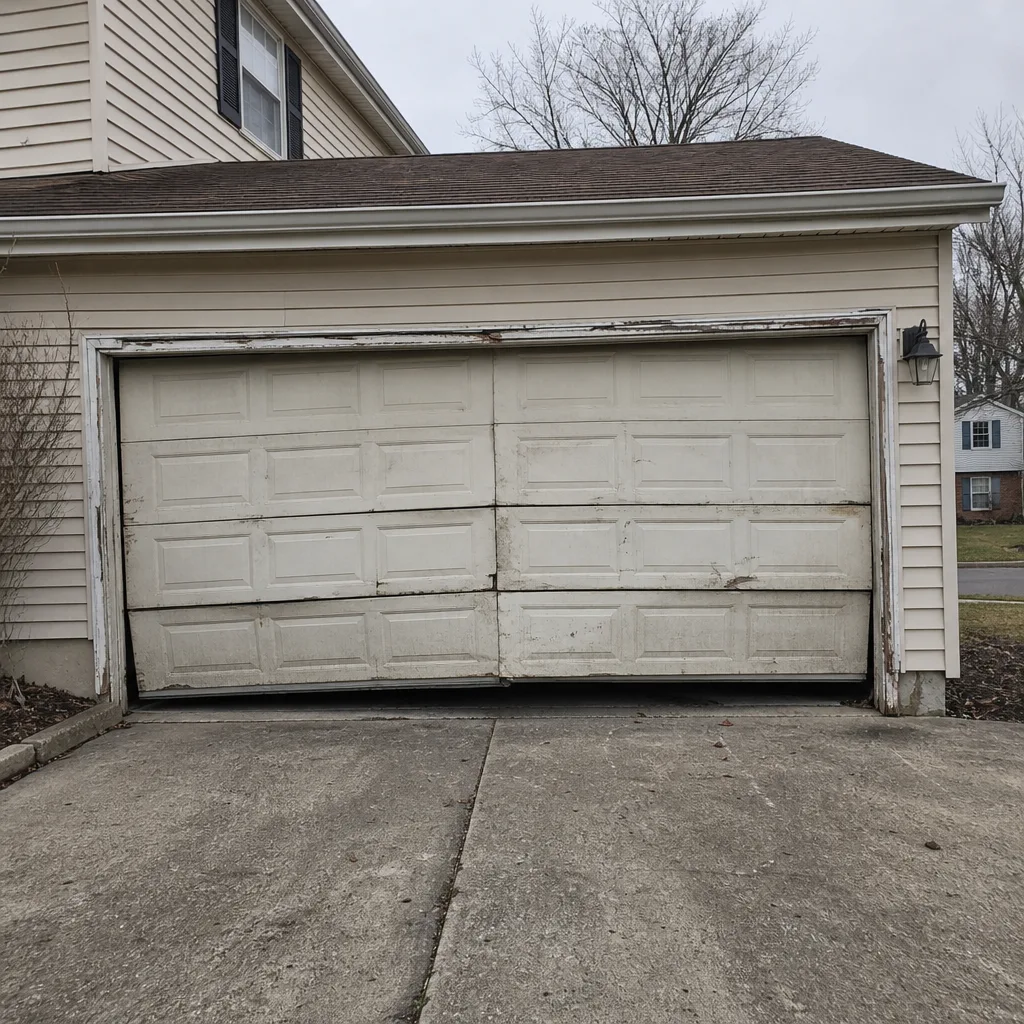 Before
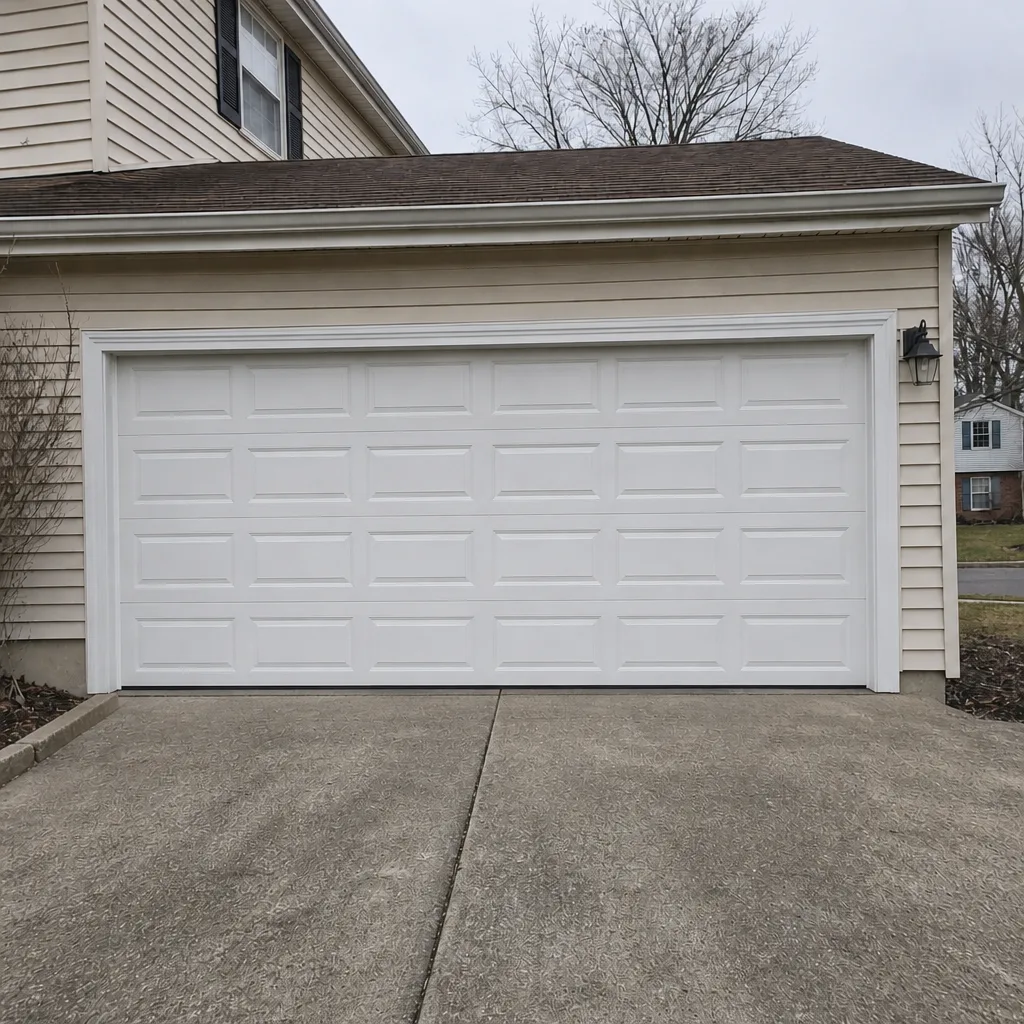 After
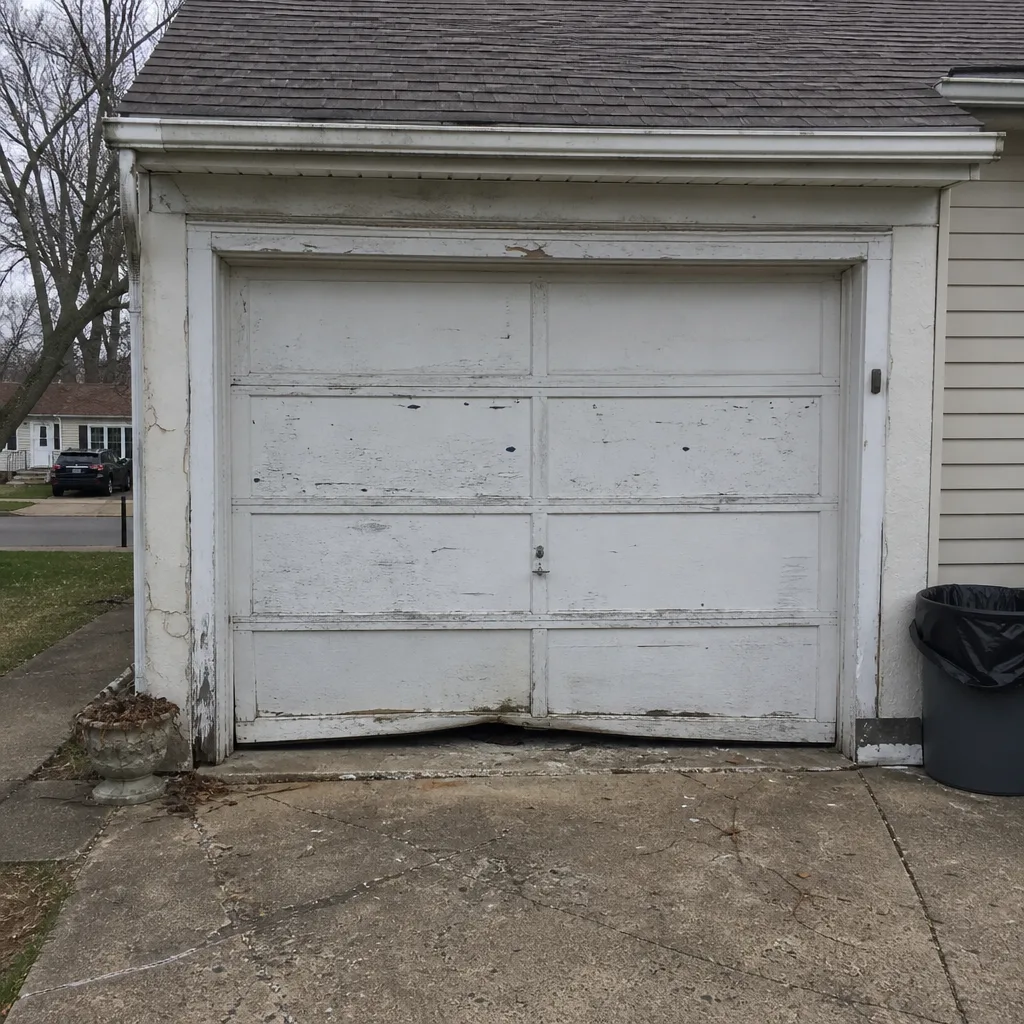 Before
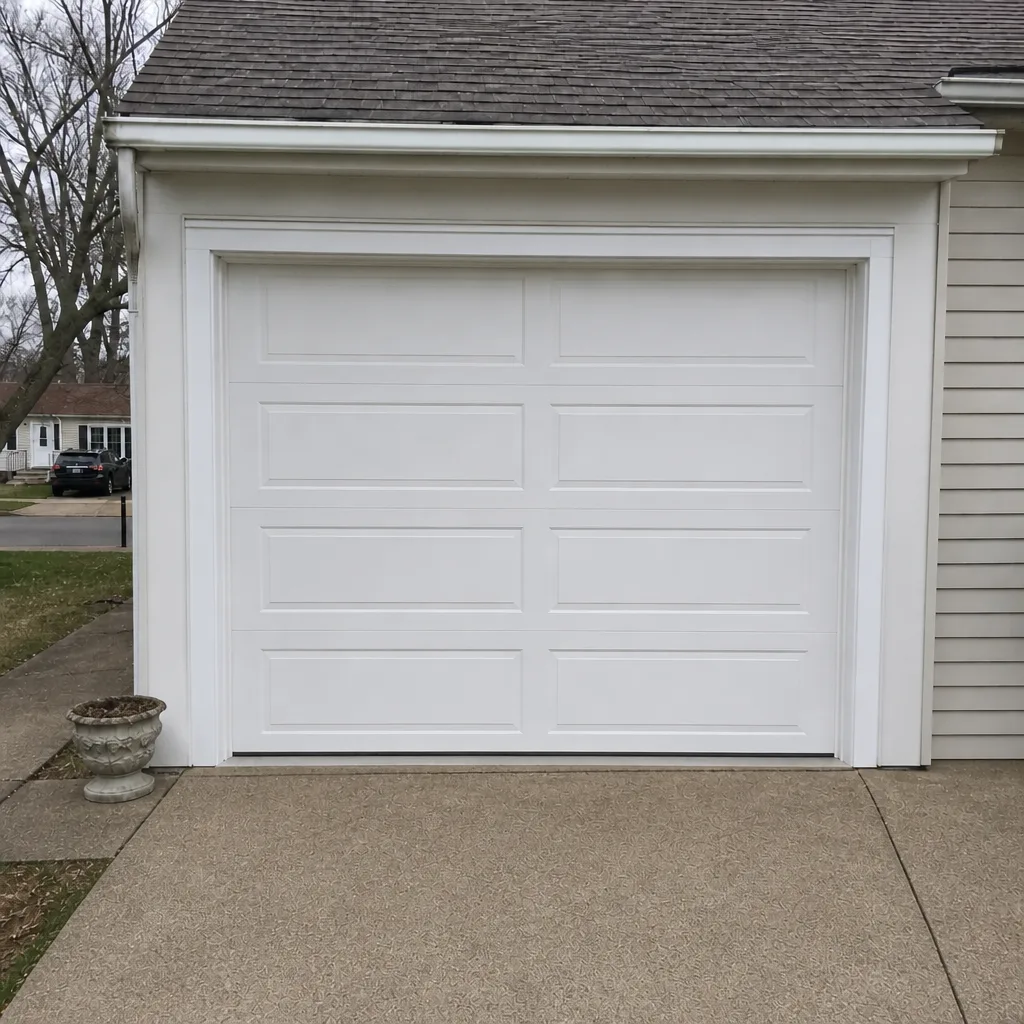 After
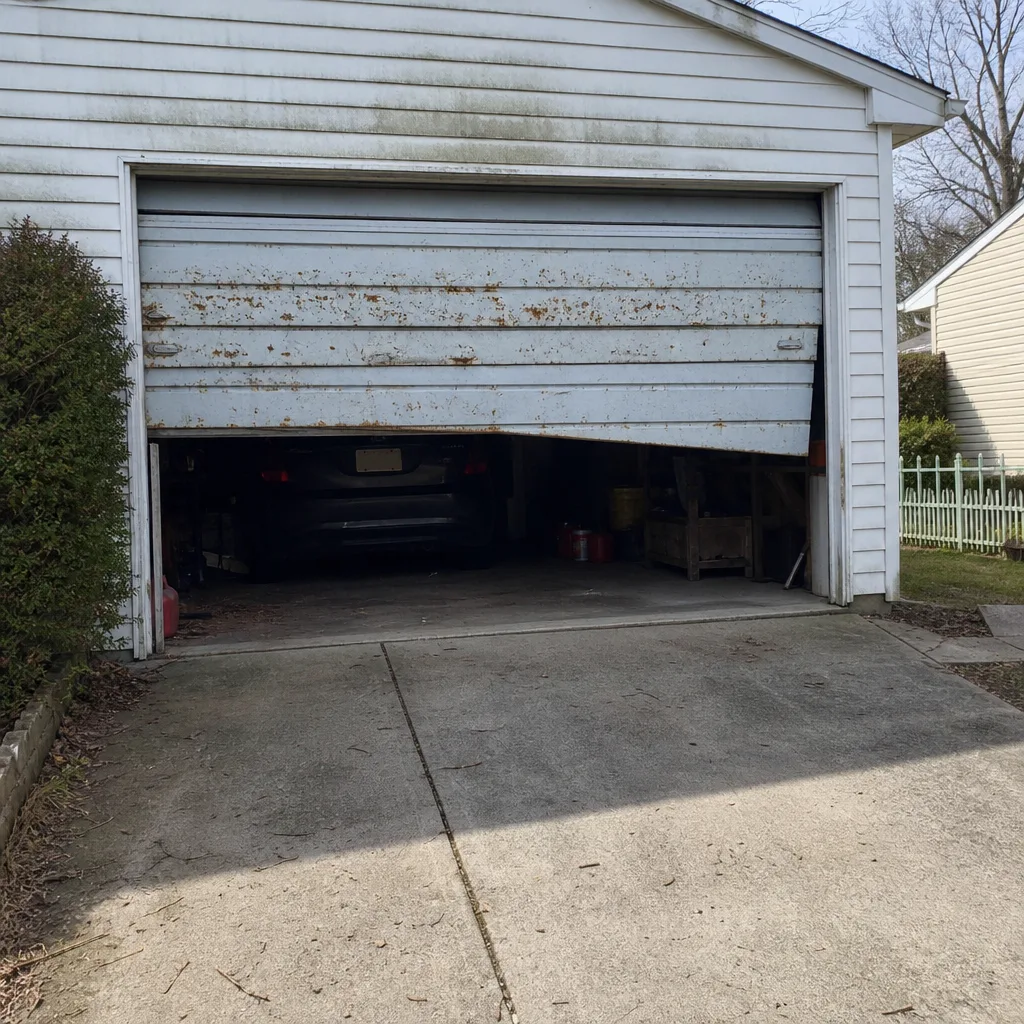 Before
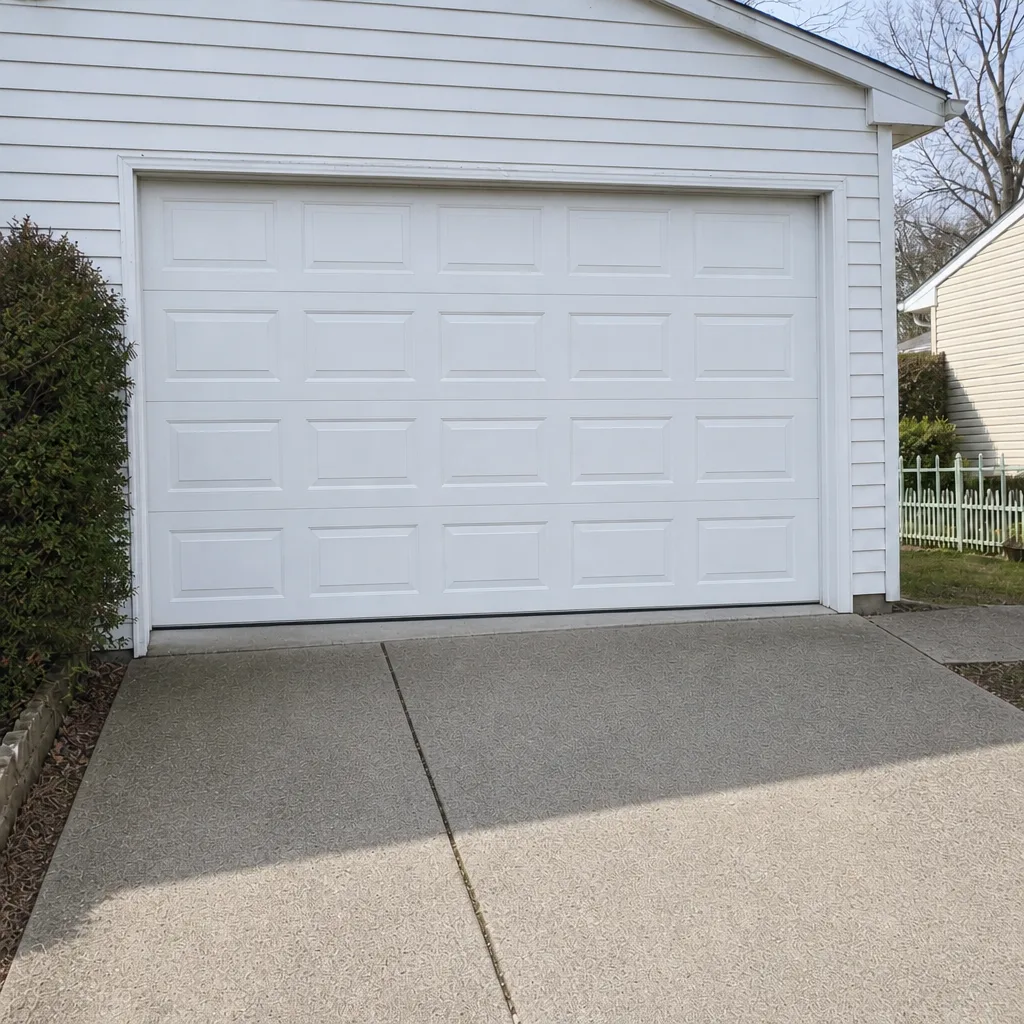 After
When to Call a Professional
Call a professional the moment any warning sign falls into the “stop now” category – a pop from above, a hinge that won’t hold, a cable strand that’s broken, a door that won’t close, or uneven movement. Call the same day if you need the door tonight. Call for a scheduled visit for the “this week” category: grinding, scraping, slow movement, and a door that reverses at the floor. And call for a free estimate if a string of smaller signs has been building for months and you’re not sure where to start.
A door that won’t open or close isn’t a convenience problem; it’s a security and access problem. Cherry Hill Garage Door Repair Pros offers emergency garage door service for exactly that situation, handles the full range of repair and installation, and offers free estimates in Cherry Hill. Call (833) 772-5404 to get the diagnosis, the price, and the fix.
Frequently Asked Questions
A visible broken spring or a frayed lift cable is the most serious warning sign, and the door should stop being used immediately. Both parts are under high tension and a failure can drop the door or throw a cable. If you hear a loud snap from above the door and it suddenly feels heavy, that’s the pattern. Call (833) 772-5404 for an exact quote – estimates are free.
Look for a gap between the spring coils, a spring that looks longer than it should be, or a clean split in the spring above the door. You may also hear a pop, and the door may stop lifting cleanly. Any of these means stop using the door and get it checked. A failing spring is not something to run until it breaks.
Yes – a door that won’t close is exactly the case our emergency service is built for, and we treat it as a security problem rather than a scheduling inconvenience. Call us at (833) 772-5404 and we’ll get you a booking. If it’s outside our usual day, early mornings or Sundays are the alternative.
No. The price is quoted and agreed before any work starts, so the written quote is the price you pay. A free estimate covers the diagnosis and the options, and if the repair turns out to be simpler than expected, the quote reflects that. Call (833) 772-5404 to book an estimate.
The local professional we connect you with is licensed and insured as New Jersey requires for this trade, and our technicians have up to 14 years of experience. That covers both the mechanical side – springs, cables, tracks, rollers – and the opener side across the major brands. Call (833) 772-5404 for a free estimate.
Only if the warning sign is in the “monitor and lubricate” or “schedule this week” category. If you’re hearing a pop, seeing a broken spring or frayed cable, or the door won’t close, stop using it. A door that’s still running after a serious sign can fail without further warning, and the result is usually more expensive than the repair would have been. Call (833) 772-5404 to get it looked at.
The Bottom Line
The most useful thing this guide can leave you with is the idea that a garage door talks to you before it fails. Grinding, scraping, popping, rattling, and squealing each point to a different component, and the visual and behavioral signs – spring gaps, cable fraying, uneven movement, reversing at the floor – stack up into a clear triage. Stop the door for a pop, a broken spring, a frayed cable, or a door that won’t close. Schedule service for grinding, scraping, slow movement, and worn rollers. Monitor and lubricate the small stuff. Run the 90-second inspection monthly, never touch a spring or cable, and call a professional when the signs point that way.
If your garage door in Cherry Hill is showing any of the warning signs above, don’t wait for the failure. Cherry Hill Garage Door Repair Pros is here to diagnose, explain, and fix it – from repairing what you have to installing what you need. Call (833) 772-5404 for a free estimate and get your door restored and reliable.
Written by the team at Cherry Hill Garage Door Repair Pros.